

Arriving in Auckland
Auckland is the ideal starting point for exploring New Zealand — and it’s where our Mondumo New Zealand in 14 Days tour begins.
Whilst a handful of international flights arrive into Christchurch, the vast majority arrive into Auckland. Flights from North America typically depart in the evening and land in Auckland between 5am to 8am local time, so you’ll have a full day ahead of you upon arrival.
It’s worth enquiring with your accommodation about an early check-in, or even booking your room for the night before you arrive, so that you have a place to unpack and freshen up rather than waiting until the standard check in time which is usually 2 or 3pm.
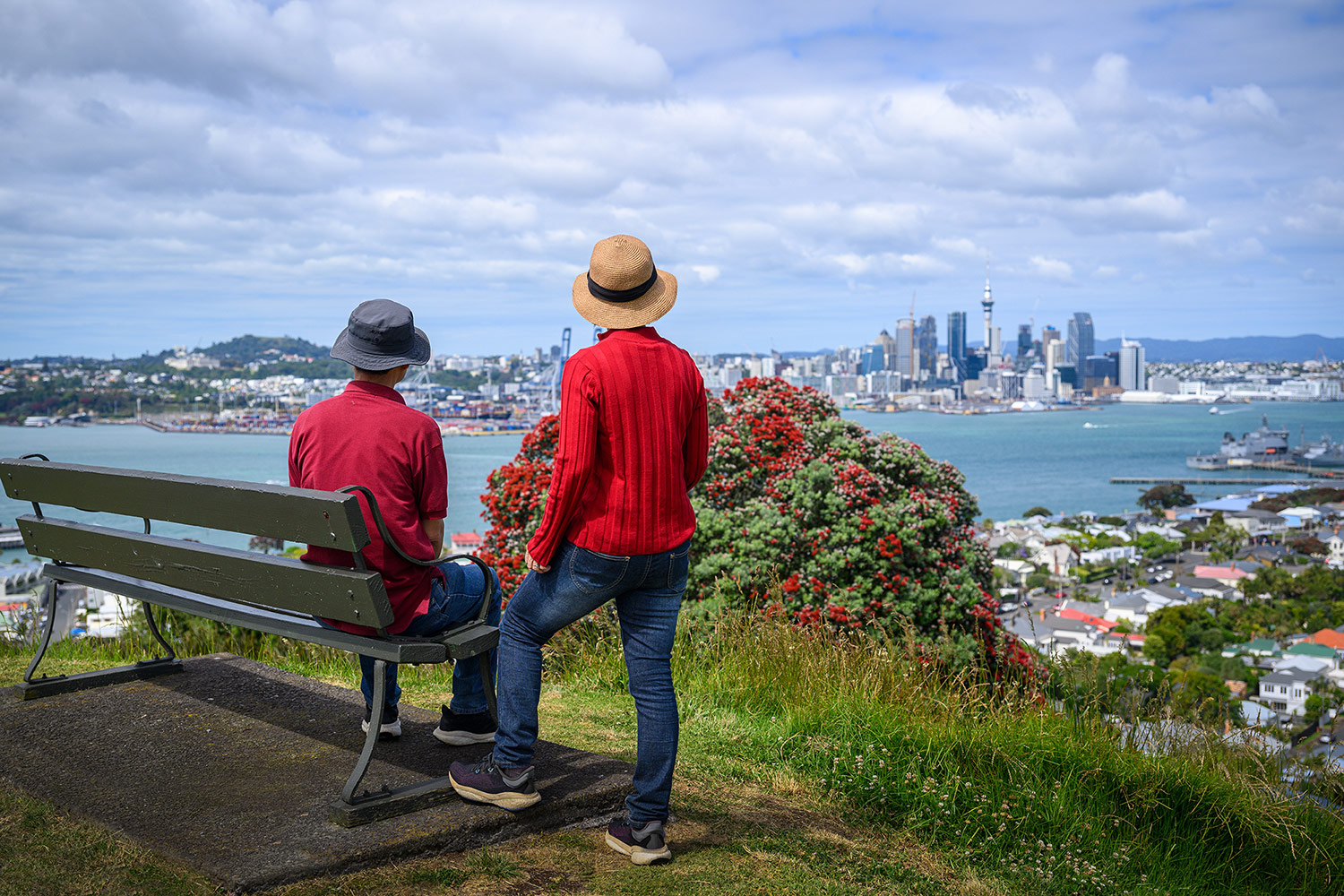
Enjoying the views of Auckland Sky Tower and skyline. Photo: Janice Chen
About Auckland / Tāmaki Makaurau
Auckland, known as Tāmaki Makaurau in Māori, is New Zealand’s most populous city, with around 1.8m inhabitants (2025). Nearly a third of New Zealand's 5.3m resident population live here, and there are more people living in Auckland than in the whole of the South Island (1.2m).
Auckland sits on a narrow isthmus at the start of the upper third of the North Island, between the Waitematā Harbour to the north and the Manukau Harbour to the south. Back in the mid 1800s it was the capital for a 24 year spell, but in 1865 the parliament moved to Wellington where it has remained since.
With more than 50 volcanic cones dotting the landscape, Auckland’s geography is dramatic and distinctive. Locals often call it the “City of Sails,” a nod to the tens of thousands of boats in its harbors and the city’s maritime culture. Unlike some New Zealand cities, Auckland is not built around a single historic core; it is a sprawling, modern metropolis with a mix of sleek skyscrapers, historic buildings, and leafy suburbs.
Historically, Auckland was an important Māori settlement before becoming a British colonial port. The Māori name for the city – Tāmaki Makaurau – translates as “Tāmaki desired by many", referring to the area's natural resources and strategic waterways. It was a place that the first people to arrive considered desirable enough to stay and clearly still is to this day.
Today, it is a cosmopolitan hub where Pacific, Asian, and European influences blend seamlessly. About 40 percent of its residents were born overseas, making Auckland one of the most multicultural cities in the world. This diversity is evident in its food, cultural festivals, and neighborhoods, from the historic streets of Parnell to the vibrant nightlife of Ponsonby and the central business district.
Though Auckland is often by-passed as an arrival and departure point by travelers on their way to Queenstown or Rotorua, it offers plenty for visitors who want a combination of urban experiences, natural beauty, and outdoor adventure. And if you time your visit for a weekend, the city slows down, giving you a glimpse of its relaxed, laid-back Kiwi lifestyle.
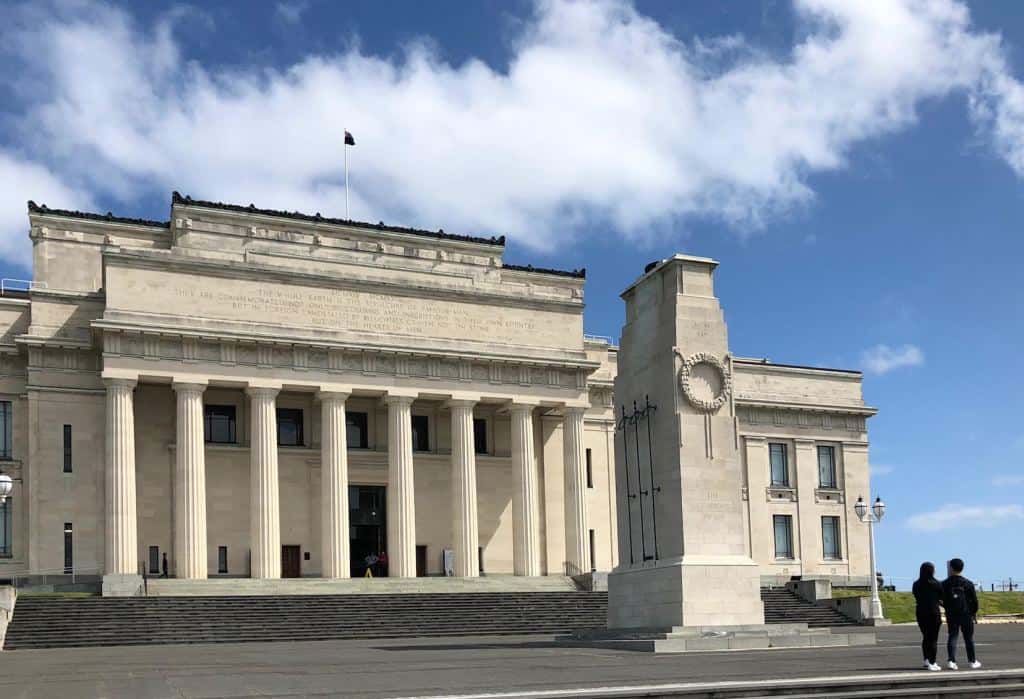
Auckland Museum
Planning Your Time

Waiheke Whisky
Tourist Information centres in New Zealand are branded as “i-sites”. Auckland’s i-site is located at 188 Quay Street, next to M Social Hotel and across the road from the Downtown Ferry Terminal. Drop in for paper maps, travel reservations, advice for transport, tours, accommodation, rental cars, and attractions in Auckland and throughout New Zealand.
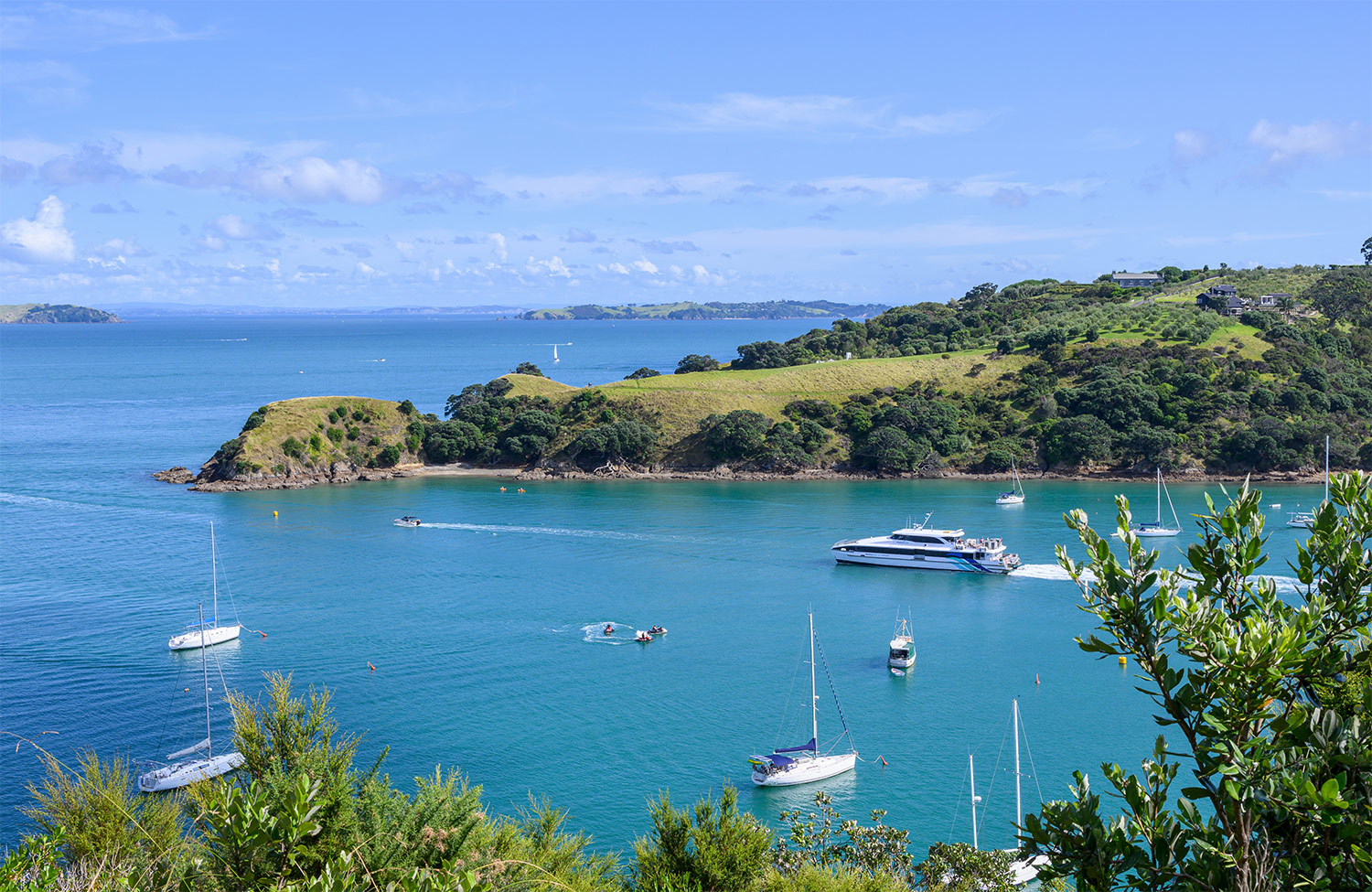
Waiheke Ferry, Hauraki Gulf, Auckland. Photo: Janice Chen
Auckland Public Transport
Auckland’s trains, buses, and ferries all use a simple tap-on, tap-off system — just use your debit or credit card at the reader when you board and again when you get off. No need for tickets or passes for most standard journeys.
If you’d like extra help planning your routes, download the AT Mobile app (for iOS and Android). It shows real-time departures, plans door-to-door journeys, and even tells you when to hop off the bus. You can find download links and a short how-to video at at.govt.nz/bus-train-ferry/more-services/at-mobile-app.
Three bus routes are especially handy for visitors:
InnerLink – This green bus circles the inner city in both directions, connecting downtown with Ponsonby, Karangahape Road (K Road), Newmarket, and a 10-minute walk from the stop to the Auckland War Memorial Museum. It’s an easy way to reach many central sights.
View route map: https://at.govt.nz/media/1976683/route-inner-link-via-parnell-newmarket-karangahape-rd-and-ponsonby.pdf
Bus 781 – The only bus that departs right from beside the Auckland War Memorial Museum. It runs to the seaside suburb of Mission Bay in about 25 minutes — a good option if you want a quick escape to the beach after your museum visit.
View route map: https://at.govt.nz/media/1976719/route-781-mission-bay-to-newmarket-and-auckland-museum-via-orakei.pdf
TāmakiLink – This bright-blue route runs along the waterfront between Britomart (downtown) and St Heliers, passing Mission Bay, Kohimarama, and other beaches along Tāmaki Drive. If you take the 781 from the museum to Mission Bay, you can catch the TāmakiLink back to the city — or walk instead: it’s about two hours, mostly flat, and very scenic.
View route map: https://at.govt.nz/media/1976685/route-ta-maki-link-glen-innes-to-britomart-via-st-heliers-and-tamaki-drive.pdf
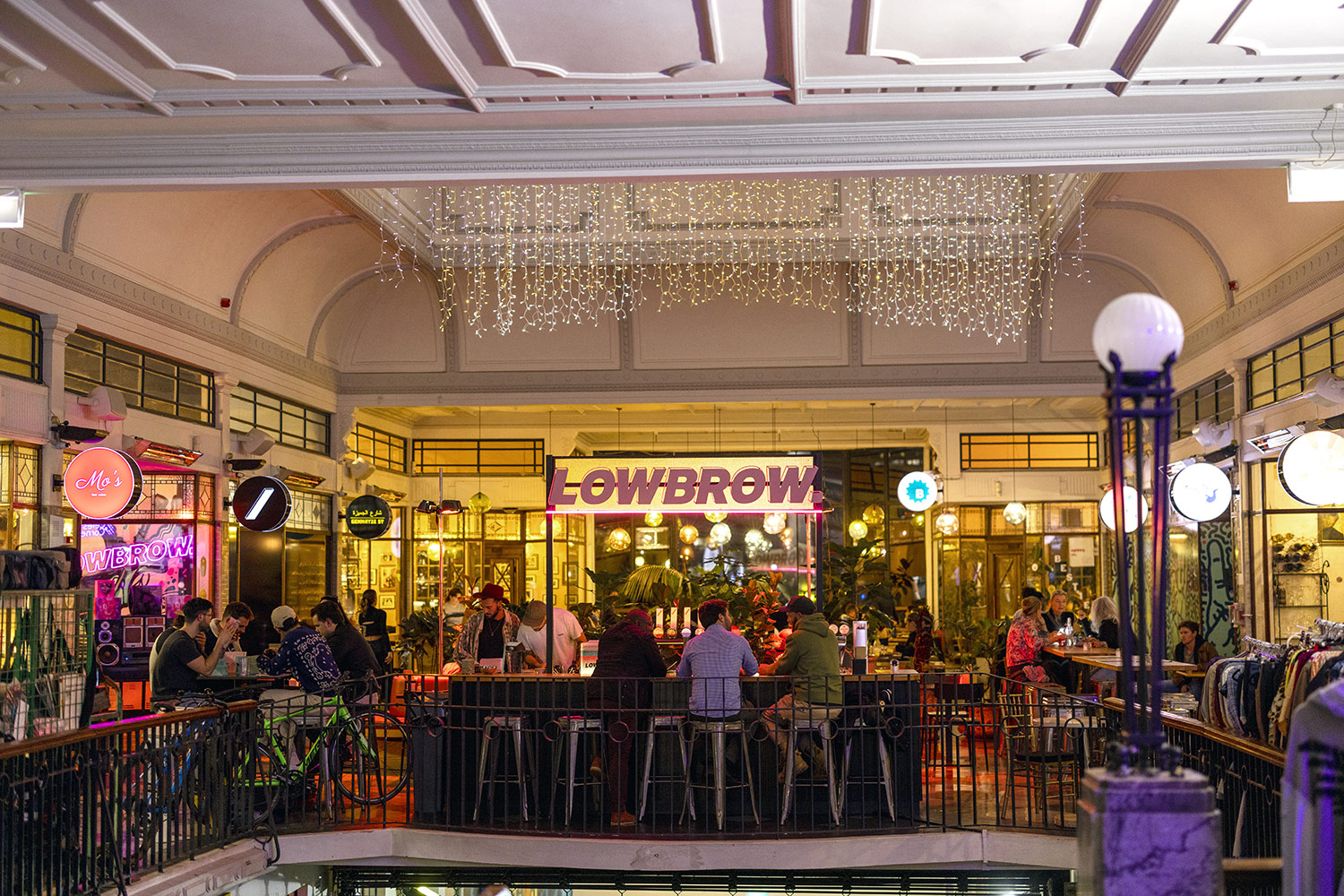
St Kevins Arcade, K Road, Auckland City. Photo: Miles Holden
Helpful Hints
Eating out: Auckland’s dining scene is vibrant and diverse, but don’t be caught off guard — many restaurants close on Mondays, especially smaller or family-run places. Always check hours in advance, particularly if you’re planning to dine somewhere specific. Public holidays (like Waitangi Day in early February or Labour Day in late October) can also affect opening hours, with some places adding a surcharge or closing entirely. Check the dates of all public holidays here - https://www.govt.nz/browse/work/public-holidays-and-work/public-holidays-and-anniversary-dates/
Events and What’s On: There’s almost always something happening in Auckland — from live music at the waterfront to food festivals and outdoor cinema in summer. Before you arrive, check aucklandnz.com/whats-on and Eventfinda.co.nz for current listings. You might discover a night market, concert, or sporting where you can mingle with the locals.
What to Wear: Auckland’s weather is famously changeable — locals joke about “four seasons in one day.” Bring light layers, a waterproof jacket, and comfortable shoes for city walking. In summer, pack sunblock and a hat; in winter, a warm layer for cooler evenings. Casual dress is standard just about everywhere, though some upscale restaurants appreciate smart-casual attire.

Auckland Tour with Rangitoto Island Volcano
Looking for a Tour of NZ?
Mondumo offers small group trips crafted with the same philosophy: authentic experiences, meaningful connections, and expert guides who love what they do.
Check out our itineraries and upcoming tour dates below.